
Loes Hendriks M.A.
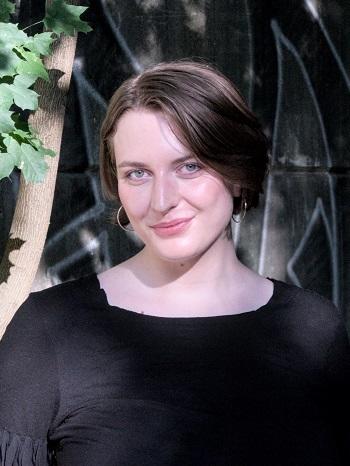
July – Dec 2025
Prehistoric Archaeology
Institut für Prähistorische Archäologie
Fabeckstr. 23/25
14195 Berlin
Education
2022 – 2025
Freie Universität Berlin
Master Archaeology of the Ancient World.
2016 – 2022
Leiden University
Bachelor Archaeology
2020 – 2021
Utrecht University
Postcolonial Studies (minor)
Work experience
2023 – 2025
ERC Project BEYONDREST
Student assistant
EUME, Forum Transregionale Studien, Berlin
2024
Togolok, Turkmenistan
Excavation of a Middle Bronze Age site, researching the interaction between sedentary and nomadic groups in the Garagum Desert
Collaboration between the University of Bern and the Freie Universität Berlin; Togolok Archaeological Project
2022
Ivancea, Moldova
Excavation of a late Iron Age settlement of the Poienești-Lucașeuca culture
Collaboration project between the Freie Universität Berlin and the Universitatea Pedagogică de Stat “Ion Creangă”
2018
Százhalombatta-Földvar, Hungary
Excavation of the Bronze Age tell at the Danube river in Százhalombatta
Part of the ongoing excavation project by SAX, collaboration between the Matrica Museum in Százhalombatta, the University of Cambridge and the University of Southampton
2018
Baarlo, Venlo, the Netherlands
Survey project with boreholes and test pits in a burial mound landscape dating to the Neolithic, Bronze Age and Iron Age periods
Conducted by Archol and Leiden University
2017
Categorization of the Meuse valley flint collection of the Dutch National Museum of Antiquities, Leiden
What we cannot excavate. Using Holocaust women’s testimonies for archaeological research
In the past 25 years, Holocaust archaeology has received growing attention. Excavations have been carried out at extermination centers such as Auschwitz-Birkenau, Treblinka, Sobibór, Bełżec, and Chełmno, as well as at labor camps across Poland, Germany, Austria, Norway, the Netherlands, Czechia, and the Channel Islands. Non-invasive methods have also been used to study these contested landscapes. Several archaeologists have approached the topic from a theoretical perspective. However, most research has not focused specifically on the material culture of women who were victims of genocide—with the exception of Caroline Sturdy Colls, who documented finding hairpins and combs in the Treblinka gas chambers. Work at the women’s camp Ravensbrück has focused more on political prisoners. My research will examine the archaeology of Jewish, Roma, and Sinti women in the Holocaust by comparing five sites: Treblinka, Sobibór, Auschwitz-Birkenau, Ravensbrück, and a fifth (Kaunas or Lety). I will use survivor testimonies, excavation reports, and material culture, mapping them with GIS to examine how landscapes of violence are constructed and remembered.
The aim of this research is to explore the gendered and racialized experiences of Jewish, Roma, and Sinti women during the Holocaust through a comparative archaeological analysis of five sites. By integrating survivor testimonies, excavation data and material culture through geospatial mapping, it will reconstruct how these women's lives, deaths, and memories are materially embedded in landscapes of violence and how they are remembered—or obscured—in postwar heritage practices
The Project is funded by a PreDoc-Sholarship of the BerGSAS/Free University of Berlin.